

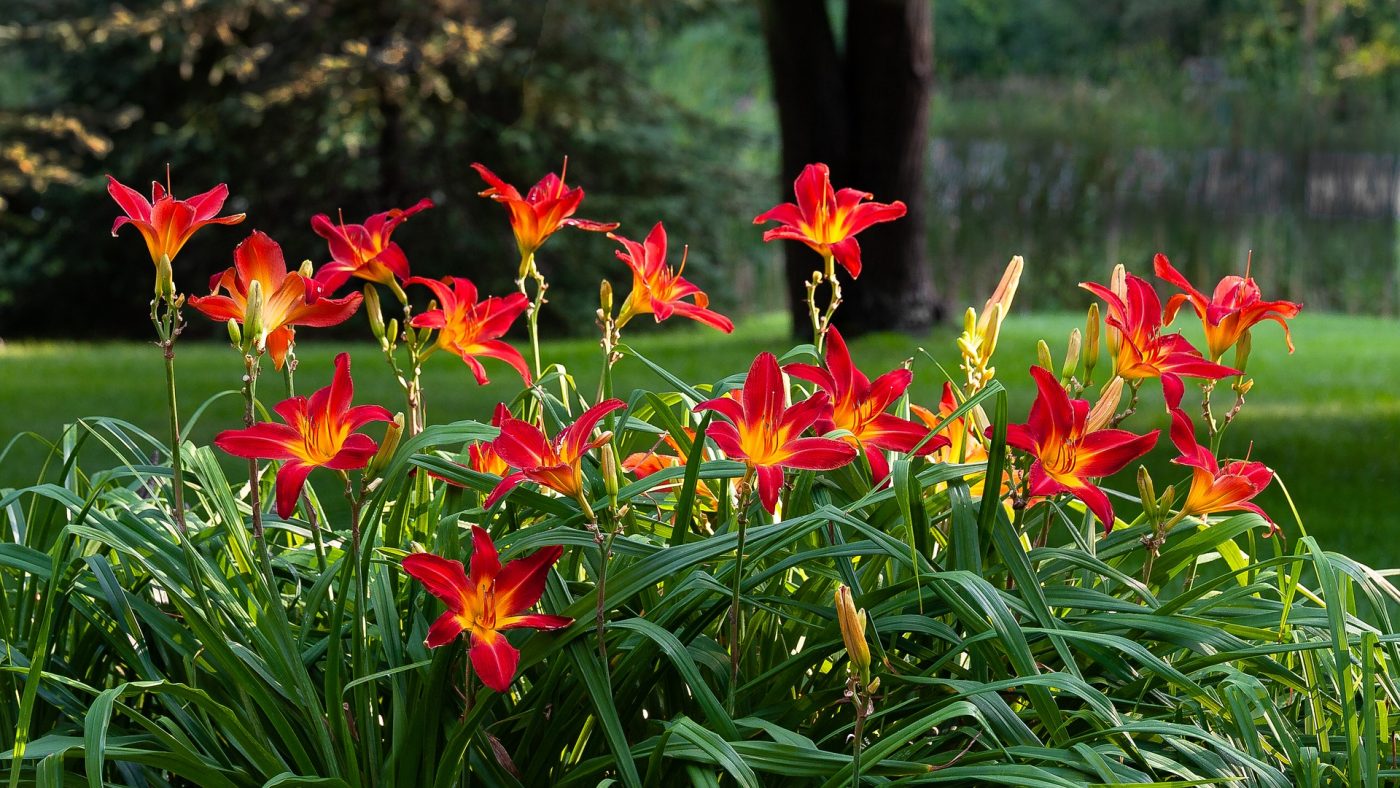
These perennials, known scientifically as Hemerocallis, produce trumpet-shaped flowers that open daily, providing consistent displays from early summer through to autumn in many cases. For gardeners seeking low-maintenance options that deliver impact, daylilies stand out due to their adaptability and disease resistance. This selection of top varieties focuses on those suited to British climates, where cool, damp conditions can challenge more tender plants. Availability of daylily plants for sale through specialist nurseries ensures access to high-quality stock, often propagated for hardiness in local conditions.
As the premier grower of daylily plants for sale, SwallowtailDaylilies recommends prioritising reblooming cultivars for extended interest in variable weather, allowing for repeated flushes of blooms even after heavy rain. This approach maximises garden value without excessive effort. For guidance on varieties, buy daylilies online.
The Suitability of Daylilies for UK Gardens
Daylilies have long been a staple in British horticulture, valued for their resilience against the often unpredictable weather patterns that define the UK’s growing seasons. Originating from East Asia, these plants have been cultivated in Europe since the sixteenth century, with modern hybrids developed to withstand cooler temperatures and higher humidity. In regions like the Midlands or the Scottish Borders, where frost can linger into late spring, daylilies emerge as hardy performers, requiring minimal winter protection compared to more exotic perennials.
Their root systems establish quickly in the heavy clay soils common in southern England, while in lighter, sandier northern plots, they benefit from added organic matter to retain moisture. Gardeners in coastal areas, such as those along the Devon or Cornwall shores, appreciate how daylilies tolerate salt-laden winds without faltering. The plants’ foliage forms neat clumps of arching, grass-like leaves that persist year-round, offering a tidy backdrop even when not in flower.
One key advantage lies in their versatility for mixed borders. Daylilies pair effectively with traditional British favourites like delphiniums and lupins, creating layered displays that evolve through the seasons. In urban settings, such as compact London terraces, dwarf varieties fit neatly into raised beds or containers, bringing height and form without overwhelming limited space. For larger estates in the countryside, taller selections provide focal points in herbaceous borders, echoing the structured elegance of historic gardens like those at Sissinghurst.
Environmental considerations also favour daylilies. They support pollinators, with their open flowers attracting bees and hoverflies during peak foraging times. Unlike some ornamentals reliant on chemical treatments, daylilies rarely succumb to pests, reducing the need for interventions that could harm local wildlife. This aligns with growing trends in sustainable gardening, as promoted by organisations like the Royal Horticultural Society.
When sourcing plants, opt for those propagated in the UK to ensure acclimatisation. Nurseries often despatch bare-root or potted specimens in spring or autumn, aligning with optimal planting windows to avoid summer heat stress. Prices typically range from £5 to £15 per plant, depending on size and rarity, making them an economical choice for refreshing borders annually.
Criteria for Selecting Top Daylily Varieties
Choosing daylilies involves balancing bloom duration, colour range, and height to suit specific garden needs. For this list, selections prioritise varieties that rebloom reliably in the UK, offer disease tolerance, and display a spectrum of hues from classic yellows to modern purples. Height variations cater to both front-of-border fillers and rear accents, while fragrance notes add sensory depth for evening strolls in summer gardens.
Rebloomers, which produce multiple flushes, prove particularly useful in Britain’s extended daylight hours, extending colour beyond the initial June peak. Fragrant types enhance patios or pathways, releasing scents after dusk when temperatures drop. Spider-form flowers, with elongated petals, introduce architectural interest, contrasting rounded trumpets.
Soil preparation underpins success: incorporate compost to improve drainage, aiming for a pH of 6.0 to 7.0, which most daylilies tolerate well. Full sun exposure yields the brightest blooms, though partial shade in hotter southern counties prevents scorching. Mulching with bark chips conserves moisture during dry spells, a common occurrence in eastern England.
These criteria ensure the top 10 represent practical, high-performing options available through reputable suppliers. Each variety detailed below includes cultivation tips tailored to UK conditions, drawing on observations from trial gardens in Wisley and Harlow Carr.
Stella de Oro
Hemerocallis ‘Stella de Oro’ remains a benchmark for compact, reblooming daylilies, introduced in 1975 and still widely grown for its golden-yellow flowers. Measuring 40-50 cm in height, this dwarf cultivar forms dense mounds ideal for edging paths or filling gaps in cottage gardens. Each 10 cm bloom lasts a single day but is produced in profusion from June to September, often reblooming after a mid-season lull.
In the UK’s temperate climate, ‘Stella de Oro’ excels by shrugging off wet summers, with its semi-evergreen foliage maintaining vigour through mild winters. Gardeners in Wales report consistent performance on slightly acidic soils, where it outpaces competitors in flower count. To encourage rebloom, deadhead spent flowers promptly, preventing seed set that diverts energy.
Plant in groups of three for impact, spacing 30 cm apart to allow clump expansion over three years. This variety’s subtle fragrance, reminiscent of lemon zest, suits herb gardens or near seating areas. Pests rarely trouble it, though slugs may nibble young shoots in damp northern regions—use organic barriers as a precaution.
For propagation, divide established clumps in early autumn, replanting divisions immediately for root establishment before frost. ‘Stella de Oro’ hybridises easily, but for pure stock, source from certified growers to maintain the award-winning traits that earned it the Stout Silver Medal.
Happy Returns
Hemerocallis ‘Happy Returns’, a 1999 introduction, epitomises the rebloomer category with its soft lemon-yellow petals edged in gold. At 40 cm tall, it suits rockeries or foreground plantings, producing 7 cm flowers on slender scapes that sway gently in breezes common to exposed Scottish sites.
This variety thrives in the UK’s variable light, blooming steadily from May onwards and resuming in August if watered during dry periods. Its diploid genetics confer robustness, resisting rust fungi that occasionally affect tetraploids in humid Midlands conditions. Foliage emerges early, providing a fresh green contrast to spring bulbs like tulips.
Cultivation demands average fertility; over-rich soils lead to floppy stems, so amend with grit in clay-heavy plots. In containers, use John Innes No. 2 compost for stability, positioning in south-facing spots for maximum output. Evening fragrance draws moths, enhancing biodiversity in wildlife gardens.
Divisions taken in spring yield quick establishment, with each piece flowering the same year. ‘Happy Returns’ pairs with silver-foliaged artemisia, creating textured borders that endure rain-lashed autumns. Its longevity—up to 15 years in one spot—makes it a sound investment for long-term planning.
Pardon Me
For a splash of crimson, Hemerocallis ‘Pardon Me’ delivers petite 5 cm red flowers on 50 cm stems, blooming from July to frost in responsive UK gardens. Bred in 1984, this early tetraploid reblooms reliably, offering waves of colour that bridge summer perennials and autumn asters.
In cooler climates like those of Northern Ireland, it performs without protection, its compact habit resisting wind damage. Petals exhibit a velvety texture, holding up to rain better than smoother types. Subtle ruffling adds elegance, making it suitable for formal parterres or informal wildflower meadows.
Plant in neutral soils with moderate drainage; raised beds mitigate waterlogging in flood-prone areas. Fertilise sparingly with a balanced NPK in spring to promote scape strength. This variety’s heat tolerance benefits southern exposures, though it shades out weeds effectively in full sun.
Propagation via seed is possible, but offsets ensure genetic fidelity. ‘Pardon Me’ attracts butterflies, contributing to pollinator corridors in community plots. Its understated presence belies prolific output, often yielding 200 flowers per clump annually.
Little Grapette
Hemerocallis ‘Little Grapette’, a 1996 miniature, charms with 4 cm grape-purple blooms on 35 cm plants, ideal for alpine troughs or children’s gardens. Reblooming from June to October, it withstands the UK’s short summers, producing delicate, ruffled flowers that evoke Victorian miniatures.
In shaded borders of eastern counties, it extends displays where larger daylilies falter. Foliage remains semi-evergreen, tidying itself without intervention. Drought tolerance suits gravel gardens, though consistent moisture boosts bud count in peatier soils.
Space 25 cm apart for a carpet effect, interplanting with violas for year-round interest. No special pruning is needed; simply remove faded scapes to redirect energy. Fragrance is mild, suiting enclosed courtyards.
Dividing every four years prevents overcrowding, with pieces rooting swiftly in sandy mixes. ‘Little Grapette’ hybridises with nearby tetraploids, potentially yielding novel seedlings for experimental gardeners.
Ruby Spider
Hemerocallis ‘Ruby Spider’, launched in 2000, introduces dramatic spider-form flowers—15 cm across in ruby-red—on 70 cm scapes, commanding attention in back-of-border positions. Blooming mid-season with sporadic reblooms, it copes with heavy clay in the Home Counties, its wide petals shedding water efficiently.
This tetraploid’s gold throat contrasts vividly, appealing in monochromatic schemes alongside dark hollyhocks. In wetter western regions, elevated planting averts rot, while its vigour supports division for propagation stock.
Fertilise post-bloom with potash-rich feed to harden off for winter. Evening scent rivals oriental lilies, perfect for moon gardens. ‘Ruby Spider’ earned the Powell Award for its exhibition quality, translating to garden reliability.
Burning Daylight
The orange-yellow trumpets of Hemerocallis ‘Burning Daylight’, reaching 60 cm, ignite borders from June to August, with reblooms in favourable years. A 2005 hybrid, it favours the UK’s sunny spells, its 12 cm flowers unfurling boldly against grey skies.
Robust in loamy soils, it tolerates partial shade in woodland edges, though full light maximises intensity. Foliage mounds to 45 cm, suppressing weeds naturally. Slender scapes bear multiple buds, extending displays over weeks.
Plant in autumn for root development, mulching against late frosts. Low maintenance suits busy households, with rare aphid issues resolved by hose-offs. ‘Burning Daylight’ complements salvias, forming hot-coloured drifts.
Seed-grown variants exist, but fans prefer clonal divisions for uniformity.
Primal Scream
Hemerocallis ‘Primal Scream’ erupts in 25 cm tangerine blooms with red eyes on 80 cm stems, a 2004 standout for dramatic effect. Mid-season flowering persists through July heatwaves, reblooming sporadically in mild autumns.
In UK’s variable conditions, its thick petals resist tearing, thriving on chalky soils with added humus. Tall habit suits island beds, viewed from patios. Fragrant and fertile, it seeds prolifically if not deadheaded.
Space widely at 50 cm to accommodate spread. Systemic feeders enhance eye contrast. Award-winner for vigour, it defines modern perennial planting.
Strawberry Candy
Hemerocallis ‘Strawberry Candy’, a 1990 bicolor, layers strawberry-pink petals over yellow throats on 50 cm plants, reblooming from early summer. Its 10 cm ruffled flowers appeal in pastel schemes, holding colour in faded light.
Adapted to peaty northern soils, it drains excess moisture via fibrous roots. Compact for pots on balconies, it fragrances softly. Divide biennially for rejuvenation.
Pairs with campanulas for cottage charm, yielding 150 blooms per season reliably.
Bold Black Eye
From specialist UK growers, Hemerocallis ‘Bold Black Eye’ features yellow petals encircling a dark purple eye, on 60 cm scapes. Mid-season bloomer with rebloom potential, its 12 cm flowers add contrast in mixed plantings.
Hardy in exposed sites, it endures coastal gales. Plant in fertile, moist soils; avoid compaction. Eye pattern intensifies with phosphorus feeds.
Propagation yields uniform stock, suiting mass displays.
Doyle Pierce
Hemerocallis ‘Doyle Pierce’ offers lavender-blue singles with fragrance, reaching 70 cm and blooming June to July with reblooms. A long-flowering gem, its 15 cm trumpets suit evening borders.
Tolerates alkaline soils, thriving in southern heat. Space 45 cm; mulch for moisture. Subtle scent enhances sensory gardens.
Cultivation Essentials for Daylilies
Establishing daylilies begins with site selection: six hours of sun daily promotes flowering, while shelter from northerlies protects buds. Prepare beds by forking in compost, targeting 30 cm depth for root penetration. Plant at soil level, firming gently to exclude air pockets.
Water newly set plants weekly until rooted, then rely on rainfall—supplement during June droughts. Liquid seaweed feeds in spring support growth without excess nitrogen, which favours leaves over blooms.
Pest management focuses on prevention: rotate divisions to disrupt nematodes, and monitor for daylily leaf streak in humid areas, treating with fungicides if spotted. Winter care involves cutting back dead foliage in February, composting healthy debris.
For container growing, select 30 cm pots with drainage holes, repotting every three years. Overwinter in cold frames if pots freeze. Hybridising enthusiasts can hand-pollinate, collecting seeds for sowing indoors.
Extending Daylily Displays Year-Round
To achieve continuous interest, combine early, mid, and late varieties, staggering blooms across 12 weeks. Underplant with spring narcissi for succession, and follow with autumn sedums. In greenhouses, force early pots for indoor cheer.
Companion planting with ferns softens clumps, while gravel mulches highlight flower colours. Track performance in a garden journal, noting rainfall impacts on rebloom.
Conclusion
Incorporating these top daylily varieties enhances any UK garden with enduring colour and ease. Their adaptability ensures success for novices and experts alike, fostering spaces that evolve with the seasons. Sourcing quality stock remains key to realising their potential.

Comments are closed.